
Emergency notification system: the connective tissue of your safety stack
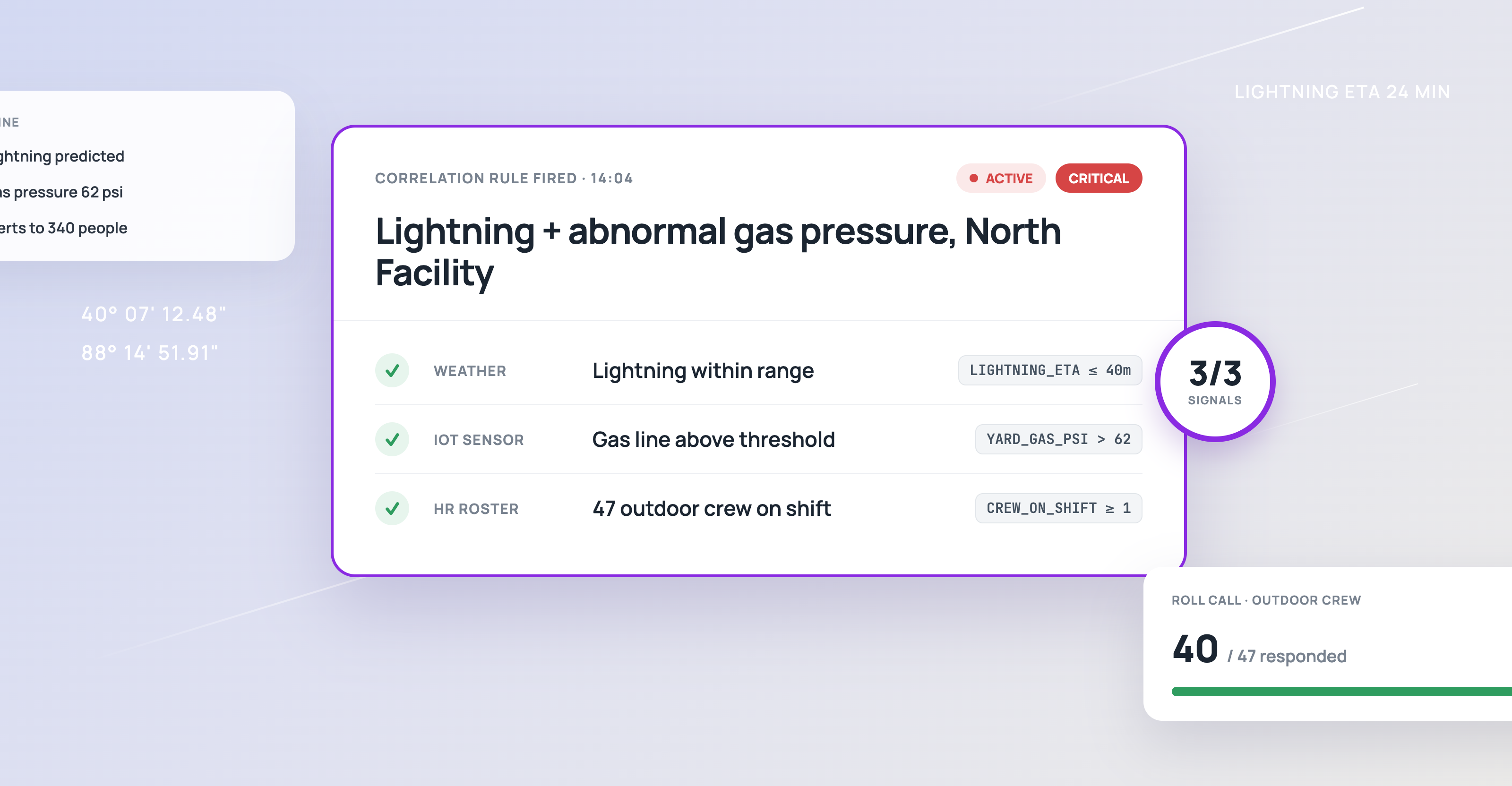
Two alerts fired within four minutes of each other. You'd think this would provide additional layers of protection for the assets and employees on site, but it was quite the opposite.
The first was a lightning warning from the lightning monitoring system: lightning was approaching an outdoor facility. That alert went to the site safety team, who began preparing the standard outdoor operations for lightning hazards.
The second came from an IoT sensor network monitoring said facility: abnormal gas pipe pressure readings had been building steadily for the past ninety minutes, now crossing the threshold for investigation. That alert went to the operations team, who dispatched technicians to check the equipment.
Alas, neither team knew about the other's alert. This is the integration problem. And it's not a technology failure per se: every system in this scenario was working exactly as designed: the weather monitoring system detected the weather, the sensor network detected the anomaly, and the ENS was ready to send an alert.
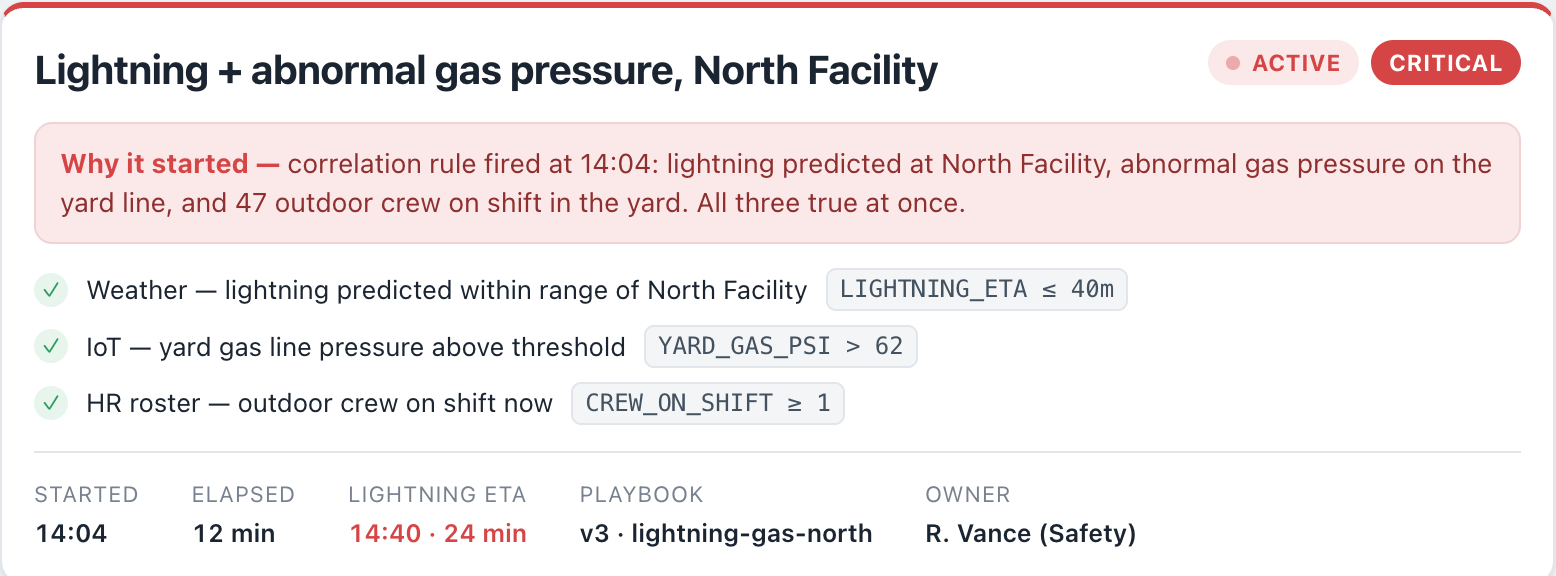
The failure was architectural: no layer in the stack connected these signals and asked what they meant together.
Emergency notification system integration is the process of connecting an ENS to the other data sources and platforms in an organization's safety infrastructure: IoT sensors, weather feeds, building management systems, HR databases, and security platforms, so that safety-relevant signals from any source can automatically trigger the right response.
An integrated ENS doesn't have to wait for a human to connect the dots. It connects them automatically, correlating signals across sources and initiating pre-configured response workflows the moment defined thresholds are met.
The safety stack problem
Most organizations use a barrage of tools to manage workplace safety: IoT sensor networks for environmental monitoring, a building management system for facility controls, a weather intelligence feed for severe weather tracking, a physical security platform for access and perimeter management, an HR system for workforce records, and somewhere in the mix, an emergency notification system for getting messages out when something goes wrong.
Each of these systems was purchased to solve a specific problem. Each does its job. Alas, almost none of them talk to each other. The emergency notification system is typically the last system added to this stack, and the one least integrated into it.
In our “case study” mentioned earlier, the data existed: both systems were generating exactly the signals a safety team would need to make the right call. The problem was that those signals lived in separate systems, monitored by separate teams, with no automatic mechanism to surface their intersection.
Why adding a dashboard doesn't solve it
When systems are fragmented, the instinct is to add a unified display: a single screen or dashboard that shows all the feeds at once, so a human operator can see the weather alert and the sensor reading simultaneously. And while this is available for purchase, it's a partial solution.
Sure, a well-designed operations dashboard reduces the chance that someone misses the connection between two simultaneous signals. But a dashboard requires someone to be watching it, all the time, be it at 2am, during a shift change, on a public holiday, or in the twenty seconds between a sensor threshold crossing and conditions escalating from concerning to dangerous.
In a safety environment where the worst events tend to happen at the worst times—nights, weekends, during concurrent incidents that have already pulled the operations team's attention elsewhere—the dashboard+human model has a structural vulnerability.
What a connected safety stack actually looks like
Building an integrated safety stack doesn't require replacing every system in your existing infrastructure. It requires a central layer, the ENS (emergency notification system), that can receive data from existing systems, apply correlation logic, and automatically initiate responses when defined conditions are met.
A connected safety stack draws from the systems that are already generating safety-relevant data in most enterprise environments:
- IoT and environmental sensors: air quality monitors, gas detection systems, vibration sensors, temperature probes, water level gauges, and pressure monitors generate continuous data streams that can indicate developing hazards long before a threshold alert would fire.
- Weather intelligence feeds: hyperlocal forecast data, real-time conditions, and severe weather alerts at the address level (not the county-level advisories that many organizations still rely on). A weather intelligence feed integrated into the ENS can trigger pre-configured responses when forecast conditions at a specific facility cross defined thresholds, hours before the weather arrives.
- Building management systems. HVAC status, door and access control states, fire panel integration, elevator status, and facility utility readings all carry safety-relevant information during an active event. A BMS integrated with the ENS means that a fire panel activation or an access control anomaly can automatically trigger an alert workflow, without waiting for a human to relay the information.
- Physical security platforms. Perimeter alerts, access logs, and camera-linked event triggers can initiate ENS responses for security-related events.
- HR and workforce systems. Real-time workforce data—who is on site, in which role, at which specific location, on which shift—is the most underutilized integration in most ENS deployments. Its importance becomes clear the moment an alert needs to be differentiated by role, location, or shift status. More on this below.
Connecting all the systems (including the legacy ones)
The practical challenge of connecting a safety stack is that most enterprise environments contain both modern, API-ready systems and legacy infrastructure that predates modern integration standards. While the older systems present integration challenges, they're often the most safety-critical.
A robust integration framework addresses both ends of this spectrum: pre-built connectors for the most common enterprise systems, and a REST API framework for any system that exposes a data interface. This ensures that no legacy system becomes an integration blocker.
Once the data streams are connected, the correlation layer defines what the integrated system does when the data streams intersect. These rules should be configured by you, the customer, not encoded in opaque technology that the safety team can't inspect or adjust.
In addition, the automated response needs to reflect your organization's own safety protocols and risk tolerances.
Example correlation rules:
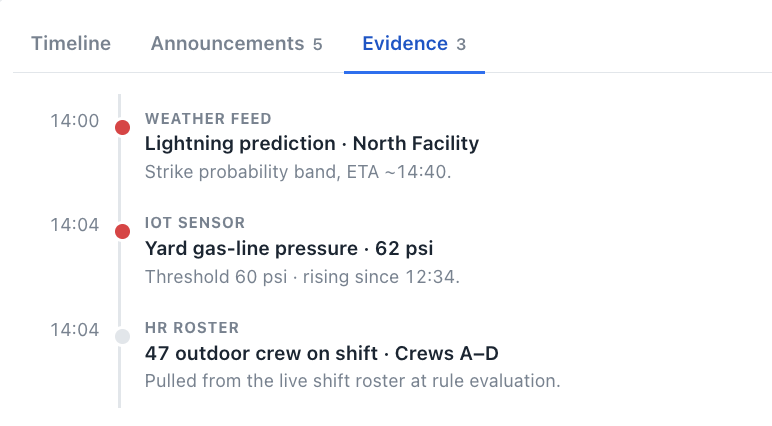
- IF weather feed shows a lightning warning at the facility, AND IoT sensors show abnormal pressure readings at the facility, AND the HR system confirms outdoor crews currently on site → trigger evacuation alert to outdoor crew at facility, notify safety officer, initiate two-way status check
- IF building management system shows HVAC fault in Building C AND air quality sensor shows CO2 readings above baseline in Building C → alert facilities team, notify safety officer, send shelter-in-place instruction to employees in Building C via all available channels
- IF weather feed shows tornado warning for zip code of Site 4 AND HR system confirms third-shift workers on site → differentiated alert: outdoor workers (evacuate to designated shelter), indoor workers (shelter in place), night supervisor (headcount protocol initiated)
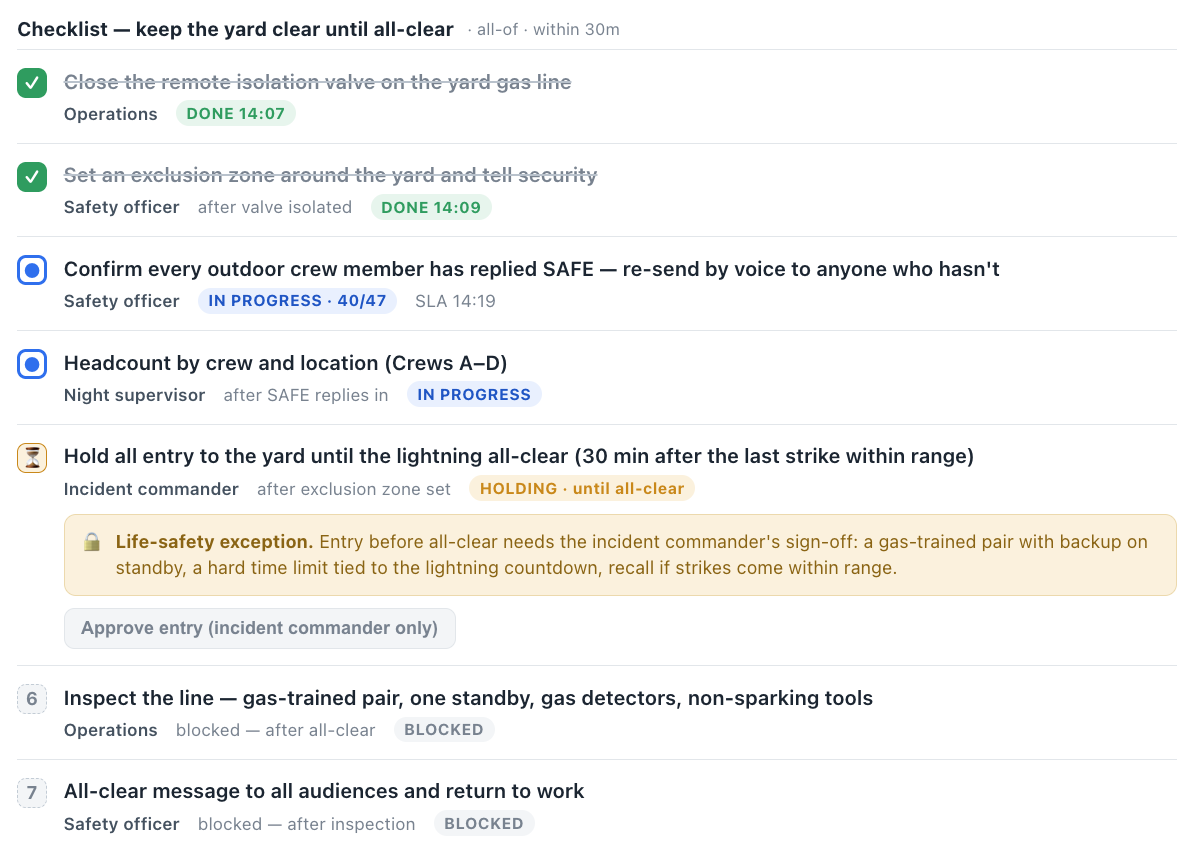
The rules ought to be transparent, auditable, and adjustable. By adjustable, I mean that when the safety team updates their protocols, the correlation rules update with them. When a new data source is added to the stack, new rules can be configured without rebuilding the integration. The automated response reflects the organization's safety logic, not your vendor's assumption about what that logic should be.
The single biggest concern safety teams have about automated response systems is loss of control: "what if the system fires an alert when it shouldn't?" Customer-configurable correlation rules directly address this. The safety team defines exactly what combination of conditions triggers exactly what response. The automation executes the protocol. The protocol remains entirely under human control: visible, inspectable, and adjustable at any time.
The HR integration nobody thinks about (until they need it)
Most organizations connect their ENS to their HR system for contact data: names, phone numbers, email addresses. That's the standard integration, and it is in fact useful for ensuring that notification lists stay current as employees join, leave, or change roles.
The more powerful integration is real-time workforce data: not just who works here, but who is on site right now, in which specific role, at which location, on which shift. When a critical event fires, this data transforms an outbound alert from a broadcast into a targeted, role-differentiated response.
Consider the operational difference:
HR integration makes the ENS aware of who it's talking to, not just where to send the message. That awareness is what enables differentiated, role-appropriate responses at the moment they're needed, without requiring a safety coordinator to manually build segmented notification lists under pressure.
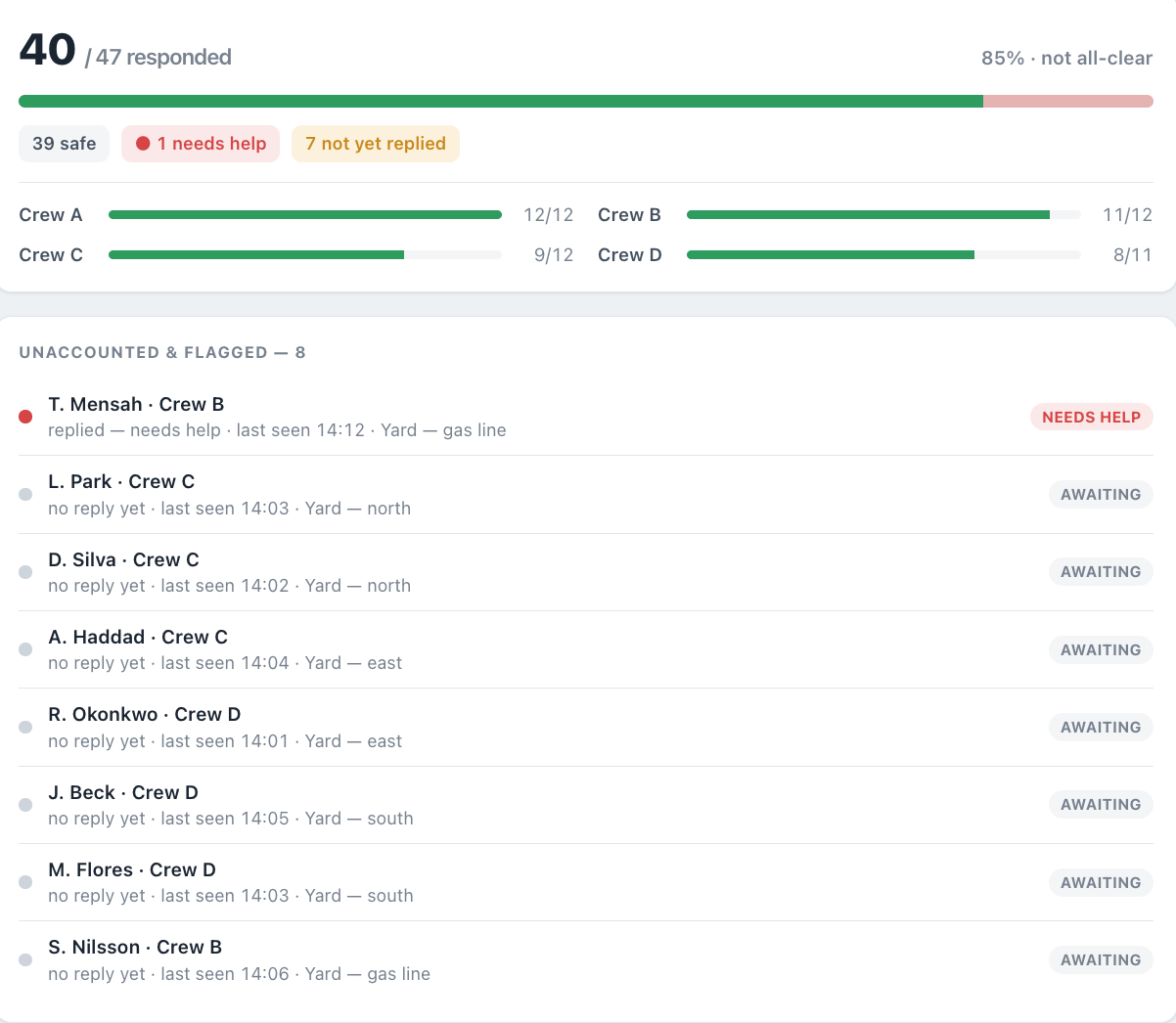
Side note: Kepler51 works with organizations that prefer to send updated lists from HR on a weekly basis. This is just fine and can be integrated into workflows as well.
Evaluating integration capability: what to ask before you buy a mass notification system
Most ENS vendors describe themselves as 'integrable' or 'open.' The right questions reveal if the integration is a real architectural capability or a selling point that requires custom development on every deployment.
Questions to ask your ENS vendor:
- Which data sources does the platform connect to natively? Ask for a specific list of pre-built connectors.
- How are legacy systems handled?
- Who configures the correlation rules? If the answer is 'our implementation team configures them during onboarding and changes require a support ticket,' the rules are not truly customer-configurable.
- Can we inspect the correlation logic? Ask to review the actual rule configuration interface.
- What happens when a data source goes offline? If a sensor network loses connectivity, does the ENS fail or alert the safety team to the gap?
- How is the integration maintained as systems update? Ask specifically about version compatibility and who is responsible for maintaining connector functionality when underlying platforms release new versions.
The integration red flag to watch for
If a vendor answers the integration question by describing their notification delivery channels (SMS, voice, email, app), they have not understood the question. These delivery channels are the output layer; integration is the input layer, aka the connections to the safety-related data sources.
Frequently asked questions
What is an emergency notification system integration?
Emergency notification system integration is the process of connecting an ENS to the other safety-relevant data sources in an org's infrastructure, including IoT sensors, weather feeds, building management systems, HR databases, and security platforms. An integrated ENS monitors signals from these sources continuously and can automatically trigger pre-configured response workflows when defined thresholds are met (without requiring a human to manually connect the dots between systems).
Why do safety data silos create risk?
Safety data silos create risk because critical information generated in one system (e.g., a sensor anomaly, a severe weather forecast, an access control event) is invisible to the other systems that might need to respond to it. When no integration layer connects these streams, a human operator must manually identify the connection between signals and initiate the appropriate response. That manual step introduces dangerous delays or risky conflicting responses from different safety and operations teams. Industry analysis has found that fragmented safety data systems delay emergency response times by an average of five minutes.
What is a connected safety stack?
A connected safety stack is an integrated set of safety and operations systems unified through a central integration layer that allows safety data from any source to automatically trigger coordinated responses across all systems. The ENS serves as the connective tissue: it receives signals from every source, applies correlation logic, and initiates the appropriate alert, notification, and response workflow without requiring manual handoffs between systems.
How does HR system integration improve emergency alerting?
HR system integration improves emergency alerting by giving the ENS real-time awareness of who is on site, in which role, at which specific location, and on which shift. This enables differentiated, role-appropriate alerts instead of than a single broadcast to everyone. When a critical event fires, an ENS with HR integration can simultaneously send evacuation instructions to outdoor crews, shelter-in-place instructions to facility staff, and standby notifications to office employees, while providing the safety team with an automatically segmented headcount by role and location.
Why should a customer be able to configure correlation rules in an ENS?
Because these correlation rules define what combination of conditions from connected data sources triggers what automated response. They should be set and modified directly by the customer's safety team, not by the vendor. For example: “If weather feed shows wind speeds above 40mph at Facility B and IoT sensors show abnormal pressure readings, trigger an evacuation alert to outdoor crews.”
Configurable rules ensure that automated safety responses reflect the organization's own protocols, remain transparent and auditable, and can be updated as protocols change without requiring vendor involvement.
The single source of truth problem, and its solution
Enterprise safety teams don't lack data. They lack a system that unifies that data into a single, actionable picture: what we at Kepler51 describe as a single source of truth for organizational safety.
The weather monitoring system generates truth about environmental conditions. The IoT sensor network generates truth about equipment and environmental state. The HR system generates truth about workforce location and composition. The building management system generates truth about facility status. Each of these is accurate within its domain.
The problem is that five sources of truth, unconnected, are operationally equivalent to no source of truth at all. When an event develops across multiple domains simultaneously, the safety team that has to manually assemble the picture is always behind the event.
An integrated ENS is the game-changing architecture by becoming the layer that connects, correlates, and acts on the result: it's the connective tissue of the safety
Kepler51's platform integrates data from IoT sensors, weather intelligence feeds, building management systems, security platforms, and HR systems into a single operational picture. We give you customer-configurable correlation rules that trigger automated responses when connected data streams indicate an emerging risk. To see how this might work in your environment, connect with our team.