
Your emergency notification system is talking. Is anyone listening?
It's 7:43am. A gas leak has been detected in Building C.
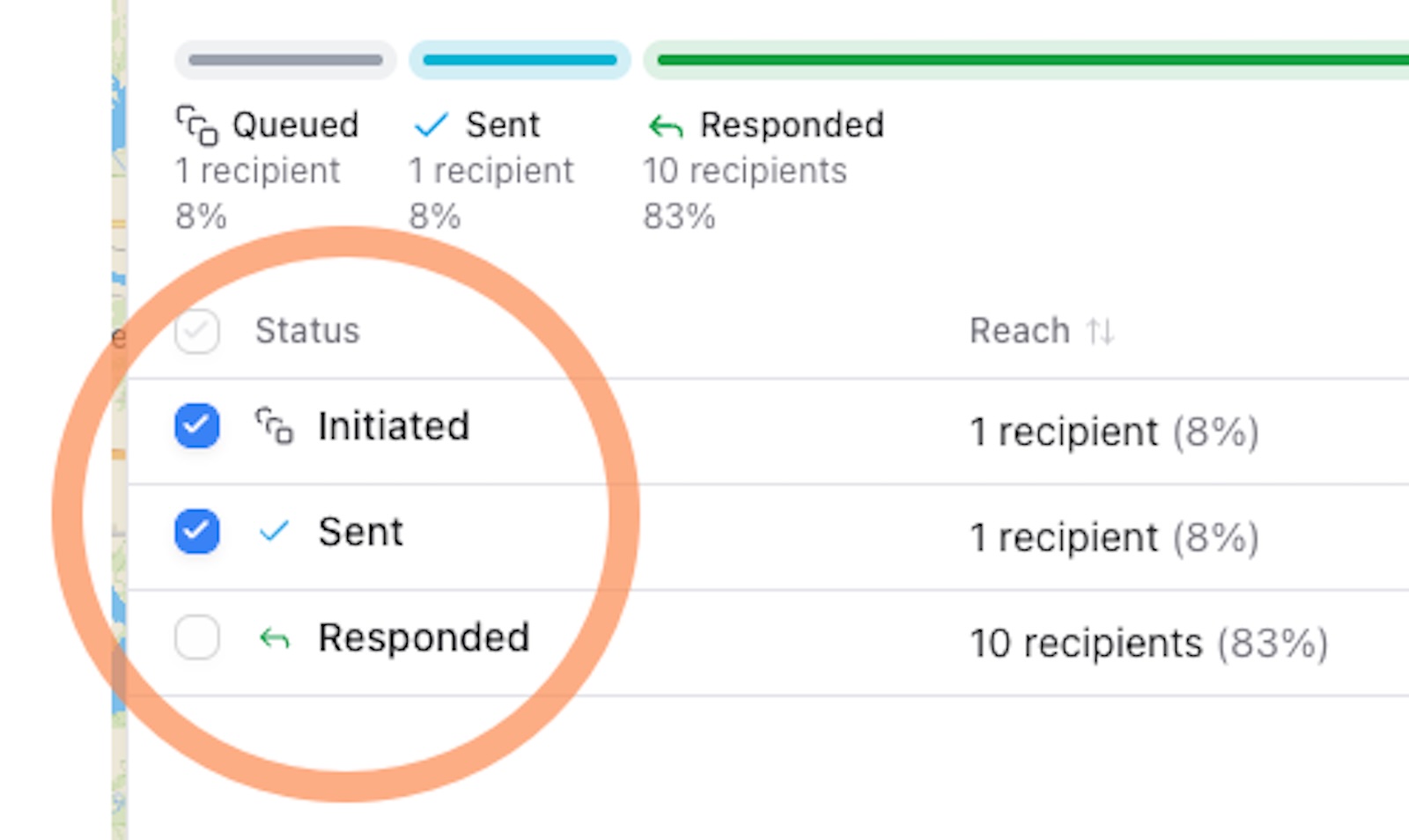
The emergency notification goes out to all 340 employees on site. The system confirms delivery within ninety seconds. Within four minutes, 287 people have acknowledged receipt.
That leaves 53 people unaccounted for.
Are they in Building C? Did they not see the alert? Are they already evacuating and just haven't replied? Did they read the message and assume someone else would handle it? Your safety team is now making decisions: where to send first responders, should we escalate to emergency services, how to communicate with the manager on the ground—with no answer to any of those questions.
This is the two-way communication gap. And it exists in most enterprise emergency notification systems operating today.
A two-way emergency notification system goes beyond broadcasting alerts to collecting, aggregating, and acting on employee responses in real time. Where a one-way system tells you how many people received a message, a true two-way system tells you who responded, who didn't, what their status is, and automatically escalates to non-responders through a secondary channel, giving safety teams the situational awareness they need to make decisions during an active event, not after it.
Why most emergency notification systems are still talking at people (not TO people)
Emergency notification systems were originally designed as broadcast tools. The digital evolution of the PA system and the fire alarm: their job was to send a message to as many people as possible, as fast as possible.
That model was adequate when organizations were smaller, more centralized, and when the safety team could physically see the people they were responsible for. A facility manager in a single building knows who's present. A fire warden with a clipboard can account for a floor. The broadcast model works when the people you're trying to reach are visible.
Today's enterprise workforce is something else entirely. Employees are distributed across multiple sites, time zones, and working environments. Large populations of lone workers, contractors, and deskless staff aren't at a fixed location when an emergency strikes. Some are in high-noise environments where they can't hear alerts. Some are in areas with poor cell coverage. Some don't carry a smartphone during their shift at all.
And yet, the broadcast model hasn't kept pace with this reality. Most organizations still measure ENS effectiveness by delivery rate, aka the percentage of people who received the alert. It's also the metric that vendors report, what gets presented in after-action reviews, and how contracts get renewed.
The problem is that the delivery rate tells you nothing about what happened next.
Delivery rate tells you a message left your system. It doesn't tell you whether your people are safe.
A recent article in the Occupational Health & Safety magazine put it plainly: "Most emergency response protocols assume every worker can be reached — and that assumption is where preparedness plans break down."
The difference between a communication system and an intelligence system
A communication system and an intelligence system look identical at the moment you send the alert, and they both count as an emergency mass notification system. The difference shows up in the minutes that follow.
The distinction sounds subtle. In practice, it's the difference between a safety team coordinating a response and one that is guessing.
When the 53 unaccounted-for employees in our opening scenario remain unaccounted for at the eight-minute mark, the safety team faces a choice: escalate to emergency services and risk an unnecessary response, or wait for more information that isn't coming. In a broadcast-only system, that's the choice. In an intelligence system, the question has already been answered — automatically, without anyone having to make a phone call.
The three gaps that break two-way communication in practice
Even organizations that have invested in two-way-capable ENS platforms often find that the capability doesn't fully deliver in real events. That's because two-way emergency communication isn't a single feature but rather a system that can fail at three distinct points.
Gap 1: The reach gap
You cannot get a response from someone you couldn't reach in the first place.
For organizations with deskless workers—construction crews, agriculture workers, field technicians, warehouse staff, outdoor workers in high-noise environments smartphone-based notification reaches only part of the workforce. The rest require PA systems, digital signage, and outdoor siren-based alerting. These channels solve the reach problem but, by their nature, they cannot collect a response.
The practical implication is a layered architecture. Digital channels—SMS, voice, app push notifications—handle two-way intelligence for employees who can receive and respond to them. Physical channels handle reach for everyone else. The two layers serve different functions in the same system, and both are required for a complete operational picture.
An organization that has deployed PA systems across a large industrial campus but relies solely on SMS for two-way confirmation has a reach gap. Field workers who received the alert through the PA have no way to confirm their status. They become, by default, non-responders, even if they're already evacuating exactly as instructed.
Why this matters
The reach gap creates false non-responders: people who received the alert and are responding correctly, but who the system has no mechanism to confirm. Safety teams that don't account for this will dispatch first responders to locate people who don't need locating, consuming response resources that may be needed elsewhere.
Gap 2: The aggregation gap
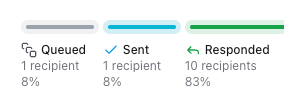
Even when responses come in, many organizations lack the infrastructure to aggregate them in real time. Responses arrive across multiple channels simultaneously—SMS replies, app acknowledgments, voice confirmations, survey responses—and fall into separate inboxes, require separate logins, or need manual reconciliation before they produce a coherent picture.
The safety team is now doing data entry during an active emergency.
This is not a hypothetical situation; it's what happens when organizations layer two-way capability onto a system that wasn't designed for it, adding a survey function here, a reply-parsing tool there, all without a unified aggregation layer underneath. To be clear, the messages are being collected; they're just not being turned into actionable intelligence fast enough to influence decisions in real time.
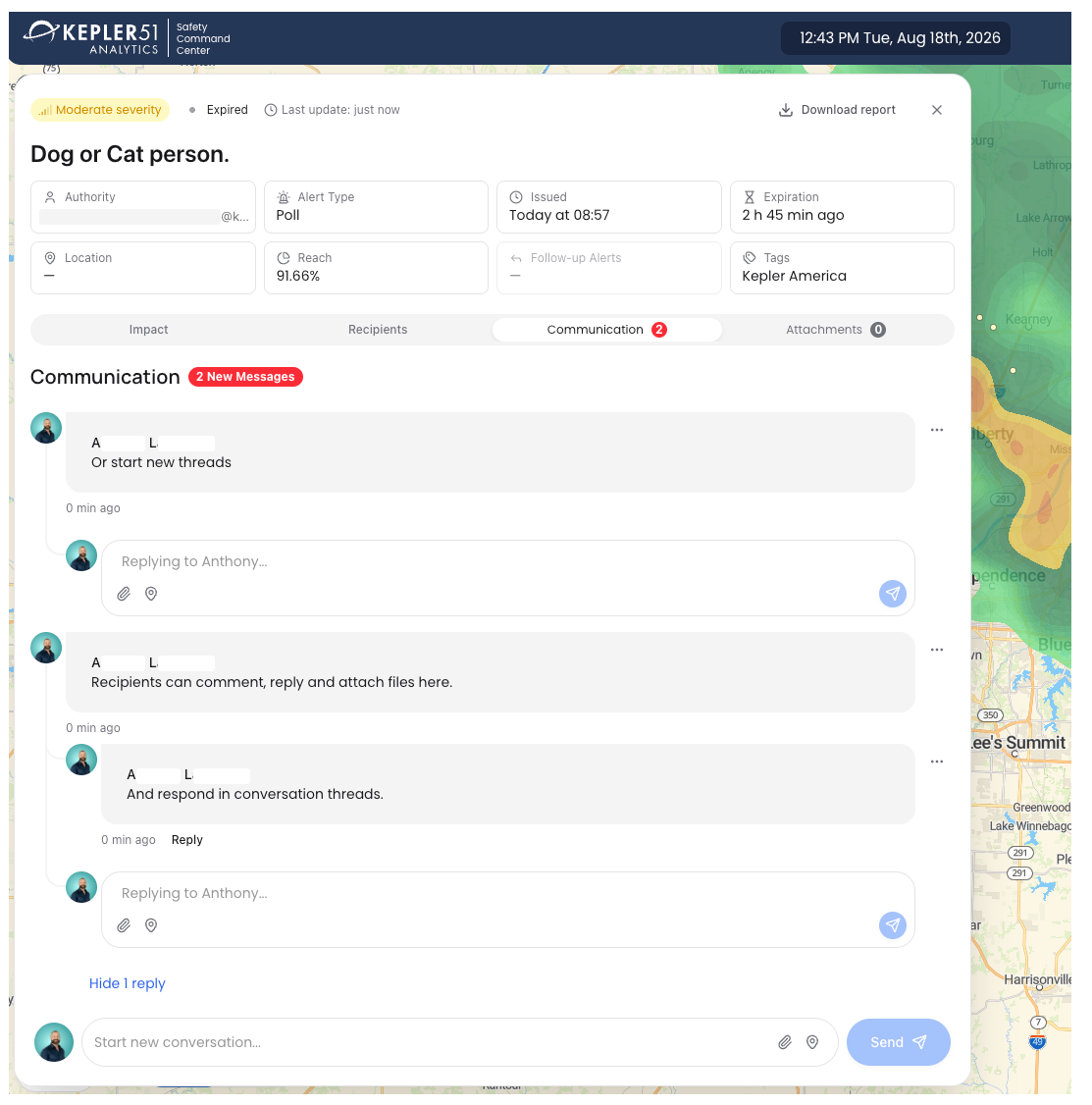
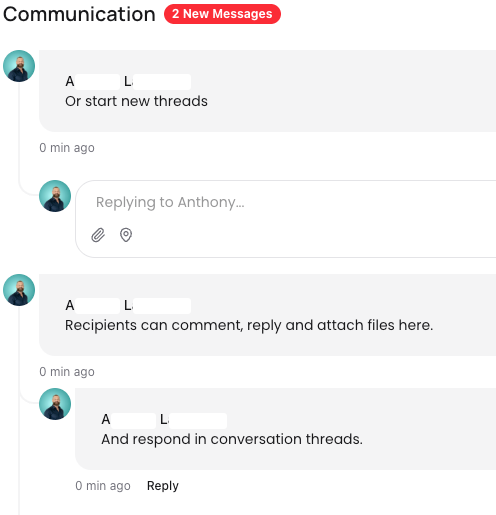
An effective two-way system automatically aggregates responses across all active channels into a single dashboard. It updates as responses arrive, without any manual input. The safety team sees a single number: confirmed safe, status unknown, and flagged for follow-up.
Gap 3: The non-responder gap
The most critical failure mode in emergency communication is when people don't respond.
Non-response is ambiguous: it could mean the person didn't receive the alert, or that they received it but are injured and can't respond. It could mean they're in a low-signal area. It could mean they read the message, assumed someone else would handle it, and went back to what they were doing. Each scenario requires a different response from the safety team, and without automated escalation logic, the default is to assume the best case and move on.
In most organizations, following up with non-responders means someone manually pulling a list of unacknowledged employees, cross-referencing it with location data or check-in records, and then personally calling or texting each one. During an active event with multiple sites involved and an incident commander requesting a status update, this process takes far longer than it should.
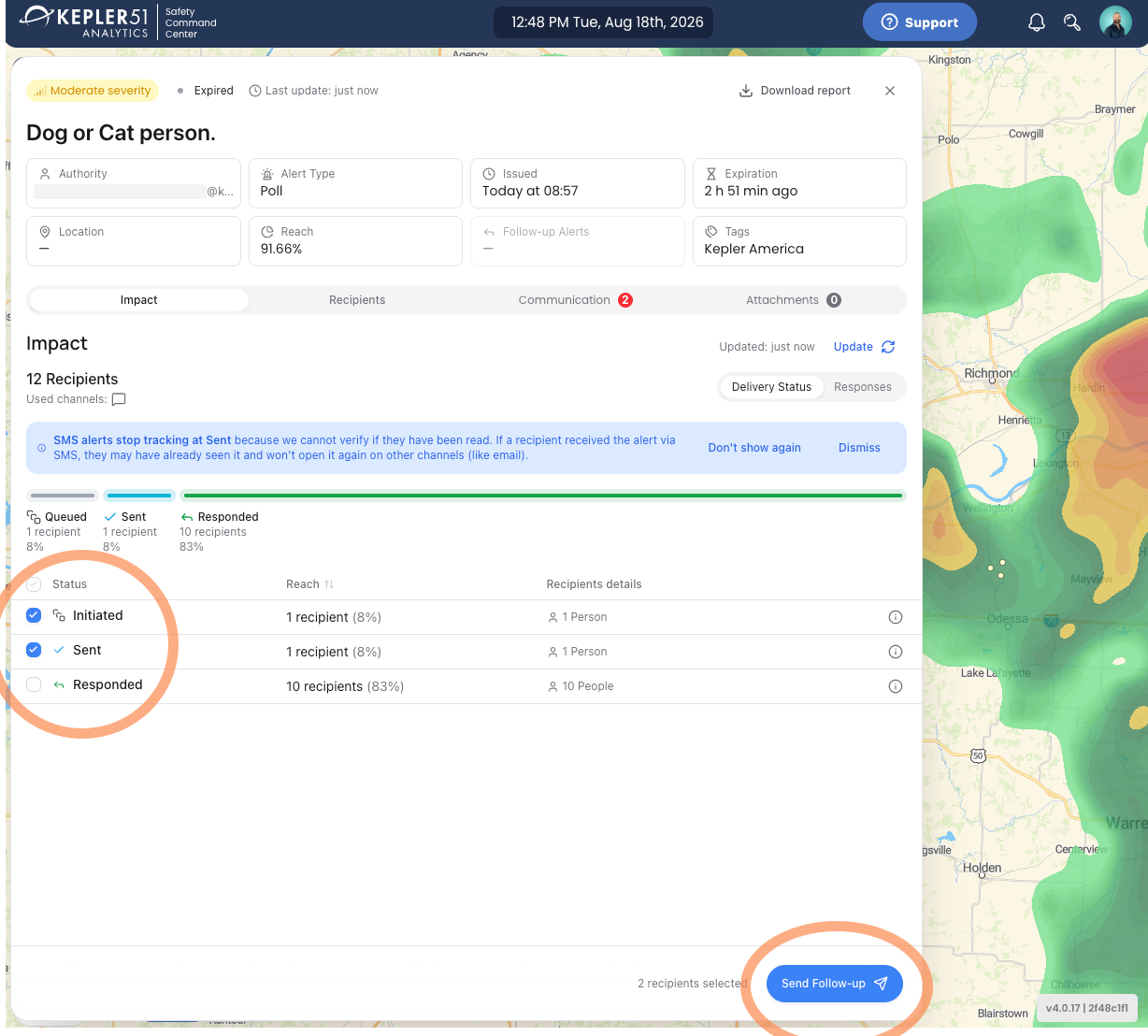
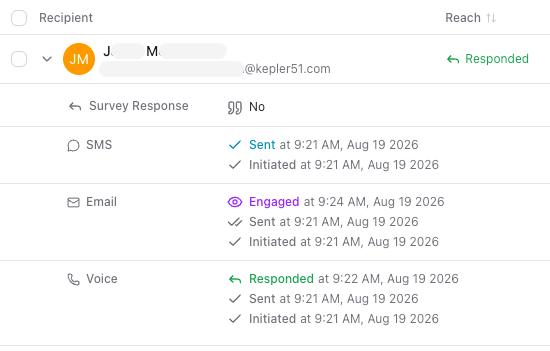
Automated non-responder escalation replaces this entirely. After a configurable window—a minute to five minutes, depending on the severity of the event—the system automatically sends a follow-up through a secondary channel: a voice call following an SMS, a desktop alert following a push notification, etc. The follow-up is logged, and the non-responder is flagged to the safety team with their last known location. The escalation continues until a response is received or the person is physically located.
Non-responder escalation turns a broadcast tool into a life-safety system.
The other serious downside of not having an automated escalation system is just as serious: first responder resources are increasingly constrained. A national survey cited in recent industry research found that 94% of fire departments and 86% of EMS services have experienced staffing challenges. Dispatching responders to search for employees who are already safe because your system couldn't confirm their status isn't just inefficient, but it diverts resources from people who may genuinely need them.
What two-way intelligence actually looks like during an active event
Return to the opening scenario: gas leak in Building C, 340 employees on site, alert sent at 7:43am. Here is what the next five minutes looks like with a two-way intelligence system in place.
- 7:43am - A sensor threshold is breached. The alert fires automatically, with no human intervention required. Employees in Building C receive evacuation instructions via SMS and voice. Employees in adjacent buildings receive shelter-in-place instructions. Field teams on the perimeter receive a status check. The PA system activates for employees in high-noise areas of the facility.
- 7:44 am - Responses begin arriving across multiple channels. The safety dashboard updates in real time: 142 confirmed safe, 97 acknowledged with no further status, 101 no response. The system automatically initiates voice call escalation to the 101 non-responders without anyone having to request it.
- 7:45am - Voice escalation responses arrive. 84 of the 101 respond. 17 remain non-responsive. The system flags these 17 to the incident commander with their last known location data. The response for the PA-only employees is noted separately (they received the alert, but cannot confirm status through the system). The safety team dispatches a physical welfare check to the Building C exit points.
- 7:46am - Incident commander has a list: 17 flagged non-responders with last known locations, 12 PA-zone employees pending physical confirmation. First responders are dispatched with specific addresses and floor numbers, not a general search order. The safety team is not guessing: they have a list, a location, and a priority order.
- 7:47am - Building C is confirmed clear. All-clear issued. The system generates a complete incident report automatically: alert sent at 7:43am, last employee confirmed safe at 7:47am, total response rate 95%, 17 escalations initiated, 5 employees located by first responders. Available immediately for after-action review, OSHA recordkeeping, and insurance documentation.
The same scenario with a broadcast-only system: the alert goes out. 287 people acknowledge it. 53 don't. Someone starts calling the non-responders manually. An incident commander is waiting for a headcount that hasn't arrived. Decisions get made on incomplete information. The 53 unknowns remain unknown until someone physically walks the building.
The time difference between these two scenarios is measured in minutes. In a gas leak or a structural emergency, those minutes are not recoverable.
Evaluating two-way capability: what to ask your vendor
Most enterprise ENS vendors list two-way communication as a feature. The right questions reveal whether it's a genuine operational capability or a line item on a spec sheet.
The most common version of this mismatch: a vendor demonstrates two-way communication by showing a survey function, e.g., employees can reply 'Yes, I'm safe' or 'No, I need help.' That's a start. But if those responses flow into a separate inbox that a human has to check and reconcile, the aggregation gap is still present. If non-response after five minutes triggers no automated action, the non-responder gap is also still present.
Questions to ask your ENS vendor:
- How are responses aggregated across channels? Is reconciliation automatic, or does someone need to compile it manually?
- What happens when an employee doesn't respond? Does the system automatically escalate, and through which channels?
- How long does non-responder escalation take? Can that window be configured per event type or severity level?
- What does the real-time dashboard look like during an active event? (Ask for a live demo, not a screenshot)
- How are deskless or field-based workers handled? What channels reach them, and how does their response (or non-response) get recorded?
- What data is captured for post-event analysis? Can response logs be exported for OSHA recordkeeping or insurance documentation?
The vendor red flag to watch for
If a vendor answers the two-way communication question by describing their delivery confirmation feature, aka the percentage of people who received the message, they have not understood the question. Delivery confirmation is table stakes; wwo-way intelligence is the capability you're evaluating.
Frequently asked questions
What is a two-way emergency notification system?
A two-way emergency notification system both sends alerts to employees and collects, aggregates, and acts on their responses in real time. Unlike one-way broadcast systems that measure success by delivery rate, a two-way system tracks who responded, who didn't, what their status is, and automatically escalates to non-responders, giving safety teams a live operational picture during an active event rather than a delivery report after it.
How does two-way emergency communication improve situational awareness?
Situational awareness during an emergency depends on knowing where your people are and whether they're safe. Two-way communication converts an outbound alert into an inbound data stream: as employees respond, the system aggregates their statuses in real time, automatically surfaces non-responders, and provides incident commanders with an accurate, continuously updated picture of the situation. This replaces guesswork with actionable intelligence in the moment it's needed most.
What happens to employees who don't respond to an emergency notification?
In a well-designed two-way system, non-response triggers automatic escalation: after a defined window, the system sends a follow-up alert through a secondary channel—for example, a voice call following an unanswered SMS, flags the non-responder to the safety team, and continues escalating until a response is received or the employee is physically located. Non-responder escalation is one of the most critical capabilities to evaluate when selecting an emergency notification platform.
Can two-way emergency notification systems reach deskless workers?
Two-way response capability requires a digital channel—SMS, voice, or app—because physical channels like PA systems and digital signage are inherently broadcast-only. Organizations with deskless or field-based workforces need a layered approach: physical channels for reach, digital channels for response. The two-way intelligence picture is built from the digital layer; the physical layer ensures no one is left unreached in the first place. Both are required for a complete operational picture.
How should two-way emergency notification data be used after an incident?
Response data from a two-way system provides an automatically generated record of who received each alert, through which channel, when they responded, and what their status was. This is valuable for OSHA recordkeeping, insurance documentation, and after-action review. It also reveals systemic gaps: low response rates on a specific channel may indicate a workforce training issue; high non-responder rates at a specific site may indicate a coverage problem worth addressing before the next event.
The measurement problem is a design problem
Organizations don't build broadcast-only emergency notification systems because they've decided situational awareness doesn't matter. They build them because delivery rate is a metric that's easy to measure, easy to report, and easy to include in a vendor contract, and because of habits stemming from a time when technology didn't have current capabilities.
The shift to a two-way intelligence model requires changing what you measure. Not delivery rate but confirmed safety rate; not messages sent but non-responders identified and accounted for. Not system uptime, but time from alert to full headcount.
These are harder metrics to collect from a broadcast system. They're built-in outputs of an intelligence system: a system designed from the start to answer the question that matters: not 'did the message go out?' but 'is everyone safe?'
Kepler51's platform combines automated multi-channel alerting with real-time response aggregation, automated non-responder escalation, and two-way status tracking—giving safety teams the operational picture they need from the moment an alert fires to the moment the last employee is confirmed safe. To see how it works in your environment, schedule a conversation with our team.