
Beyond the radio: A modern framework for lone worker safety
A worker collapses from heat stress, but the single radio shared among the crew is out of range. A fall occurs in a remote location, but by the time someone notices the worker is missing, critical minutes have elapsed. A diabetic emergency happens during a night shift in a warehouse, but there's no automated way to detect the crisis and summon help.
As a Director of Safety or EHS professional, you understand the weight of responsibility that comes with protecting workers who operate in isolation.
The stakes are clear. OSHA's General Duty Clause requires employers to provide a workplace "free from recognized hazards," and courts have consistently held organizations accountable when lone worker incidents result in serious injury or death. But beyond regulatory compliance, there's a more fundamental challenge: the gap between having a lone worker safety program on paper and actually protecting people in real-time when emergencies unfold.
In short, checkbox compliance is no longer sufficient. Organizations need systems that actually prevent incidents before they occur, detect emergencies as they happen, and enable rapid response when every second counts.
This post outlines a modern framework for lone worker protection built on three foundational pillars, and explains what safety leaders need to know to build a defensible, effective program.
The three pillars of modern lone worker protection
Effective lone worker safety isn't built on a single technology or protocol. It requires an integrated system that addresses three distinct phases of worker protection:
Prevention: Predictive intelligence before deployment that identifies risks and prevents exposure before workers ever enter hazardous conditions.
Detection: Real-time biometric monitoring and automated incident detection that identifies emergencies the moment they occur, without relying on workers to manually call for help.
Response: Automated alerts and two-way communication systems that ensure the right people are notified immediately and can coordinate effective emergency response.
These three pillars work together to create a safety net that's fundamentally different from traditional approaches. Instead of hoping workers will check in regularly or be able to call for help during an emergency, modern systems actively monitor conditions, predict risks, and automate response protocols. The result is a shift from reactive incident management to proactive risk prevention — and when incidents do occur, from delayed discovery to immediate intervention.
Let's examine each pillar in detail and explore what this means for organizations implementing comprehensive lone worker protection.
Pillar 1: Prevention through predictive intelligence
The most effective safety intervention is the one that prevents the incident from happening in the first place. Traditional lone worker programs are almost entirely reactive, designed to help after something goes wrong. Predictive intelligence flips this model by identifying risks before workers are exposed.
Modern predictive systems use hyperlocal, zip-code level forecasting to assess environmental and contextual risks specific to where workers will be deployed. This isn't general weather data or broad regional advisories. It's granular risk intelligence that can tell you, for example, that the heat index in the specific area where your agricultural crew will be working tomorrow afternoon is projected to reach dangerous levels between 2 PM and 4 PM, or that air quality conditions will create respiratory hazards for outdoor workers at a particular job site.
Consider the application in construction and agriculture, where heat-related illness remains one of the leading causes of workplace death and injury. With predictive intelligence, safety managers can make informed decisions about work scheduling, mandatory rest periods, or whether to postpone deployment entirely. A construction company might shift concrete pouring to early morning hours when thermal stress is lower. An agricultural operation might delay harvesting until conditions improve, or implement additional hydration protocols for crews working in predicted high-risk zones.
The ROI case for prevention is compelling. Heat-related workers' compensation claims can easily exceed $50,000 per incident when accounting for medical costs, lost time, and related expenses. A single prevented heat stroke or cardiac event can justify significant investment in predictive technology. More importantly, preventing incidents protects workers from life-altering injuries and protects organizations from the legal, financial, and reputational consequences of preventable harm.
This represents a fundamental shift in how we think about lone worker safety—from managing incidents to preventing them, from reactive protocols to proactive risk intelligence.
Pillar 2: Continuous detection beyond check-ins
Traditional lone worker safety protocols rely heavily on two-way radios and periodic check-ins. In theory, workers carry radios and check in at regular intervals. If they miss a check-in, someone investigates. But this approach has critical limitations that become apparent when you examine how it actually works in practice.
First, there's the infrastructure problem. Many organizations issue one radio per crew or team, not per individual worker. In agriculture, a crew of 20 workers might share three or four radios. When workers spread out across a large area, most are effectively unmonitored. Battery life compounds the issue—radios die, especially during long shifts in extreme temperatures. Connectivity is inconsistent in remote locations, warehouses with metal structures, or underground facilities.
But the more fundamental problem is that radios are entirely reactive. They require a conscious worker to recognize an emergency, reach for the device, and call for help. This model fails precisely when it's needed most. A worker who suffers sudden cardiac arrest, diabetic shock, heat stroke, or traumatic injury from a fall or vehicle crash may be physically unable to operate a radio. By the time a missed check-in triggers investigation, critical minutes or even hours may have passed.
Modern detection systems solve this through continuous biometric monitoring and automatic incident detection. Wearable devices measure core body temperature, heart rate, and heat stress indicators in real-time. Integrated sensors detect falls, vehicle crashes, and cessation of movement. These systems don't wait for workers to report emergencies—they identify physiological distress and physical incidents as they occur.
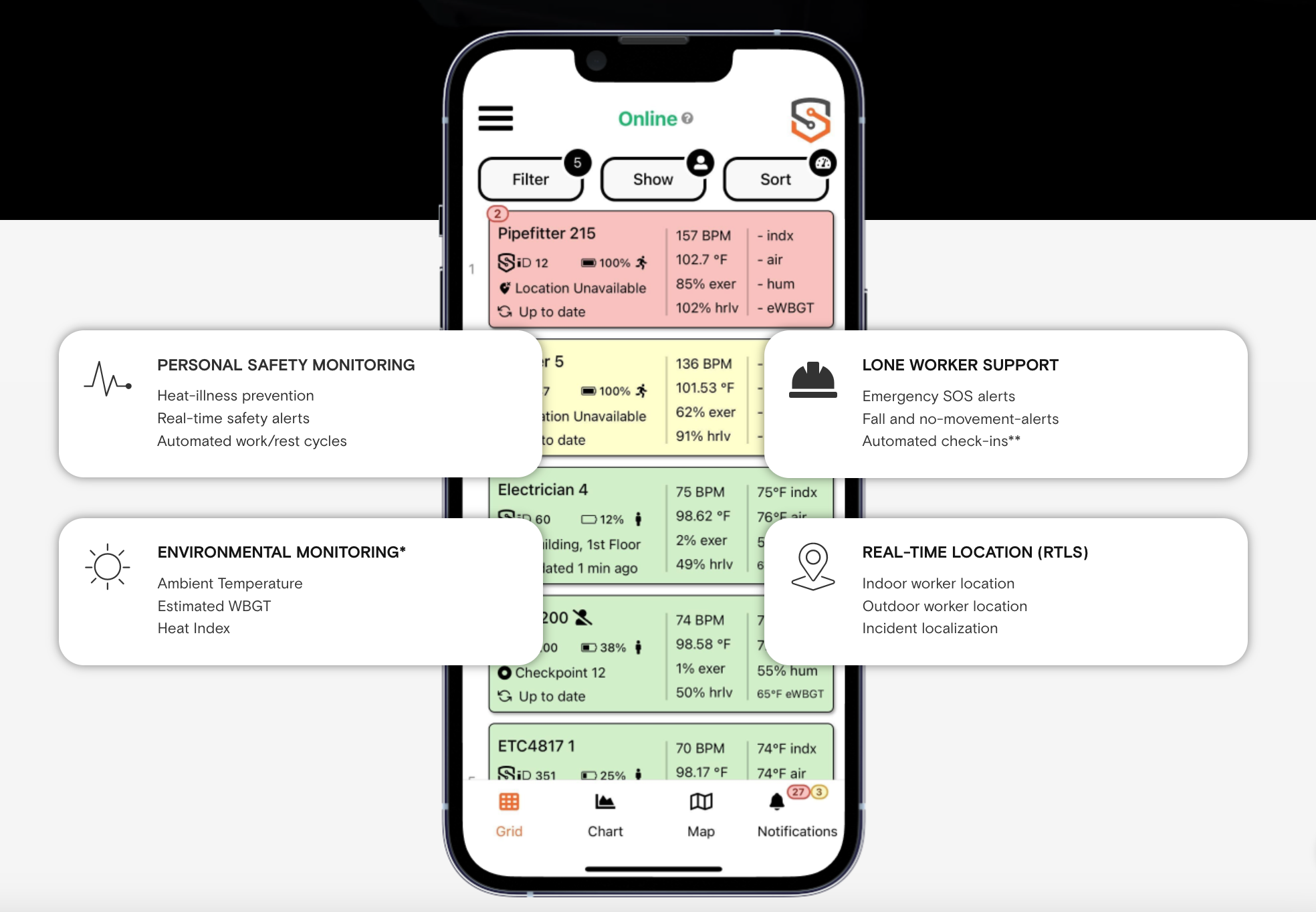
The data generated serves dual purposes. At the individual level, it enables immediate emergency detection and response. At the program level, anonymized data provides insights into heat stress patterns, fatigue indicators, and risk exposure across the workforce. Safety directors can identify which job sites, shifts, or work conditions pose an elevated risk, and then adjust protocols accordingly. The data anonymization is critical — workers need to trust that biometric monitoring protects them without compromising their privacy or being used punitively.
Consider the scenarios this technology addresses that radios simply cannot. A warehouse worker with diabetes experiences a hypoglycemic episode during a night shift when they're working alone in a remote section of the facility. Biometric monitoring detects the cardiac and physiological changes; automated alerts notify security and management immediately with the worker's exact location. A utility worker suffers heat stroke while working on equipment in a remote substation. Core temperature monitoring triggers an alert before the worker loses consciousness, enabling intervention while the worker can still be assisted to shade and given fluids.
The shift from radios to continuous detection isn't just a technology upgrade. It's a recognition that effective lone worker protection requires systems that work even when workers cannot help themselves.
Pillar 3: Intelligent, automated response
Traditional response protocols — like missed check-ins triggering manual investigation, workers attempting to radio for help, supervisors trying to determine location and coordinate response — introduce delays that can prove fatal.
Automation fundamentally changes this timeline by eliminating human delay in the notification and escalation process. When a wearable device detects a fall, a vehicle crash, or biometric indicators of medical distress, the system immediately alerts designated responders with the worker's precise location and the nature of the detected incident.
Consider a practical scenario: A warehouse worker with diabetes experiences a hypoglycemic episode while operating a forklift in a large distribution center. The biometric monitoring system detects the cardiac changes and altered movement patterns. Within seconds, an automated alert goes to the facility's security team, the worker's supervisor, and the designated first responders. The alert includes the worker's exact location in the warehouse, the type of incident detected, and relevant medical information the worker has chosen to share (in this case, diabetic condition). By the time the worker loses consciousness, responders are already en route with the information they need to provide appropriate care.
But effective emergency response requires more than just alerts. Two-way communication capabilities ensure that responders can coordinate with each other, that workers who are conscious can provide additional context, and that safety managers can communicate with entire teams when situations develop. This goes far beyond panic buttons. It includes the ability to send targeted messages to workers in specific locations, and conduct real-time surveys to assess condition and readiness (critical for heat stress monitoring or environmental hazards like
tornadoes and hurricanes).
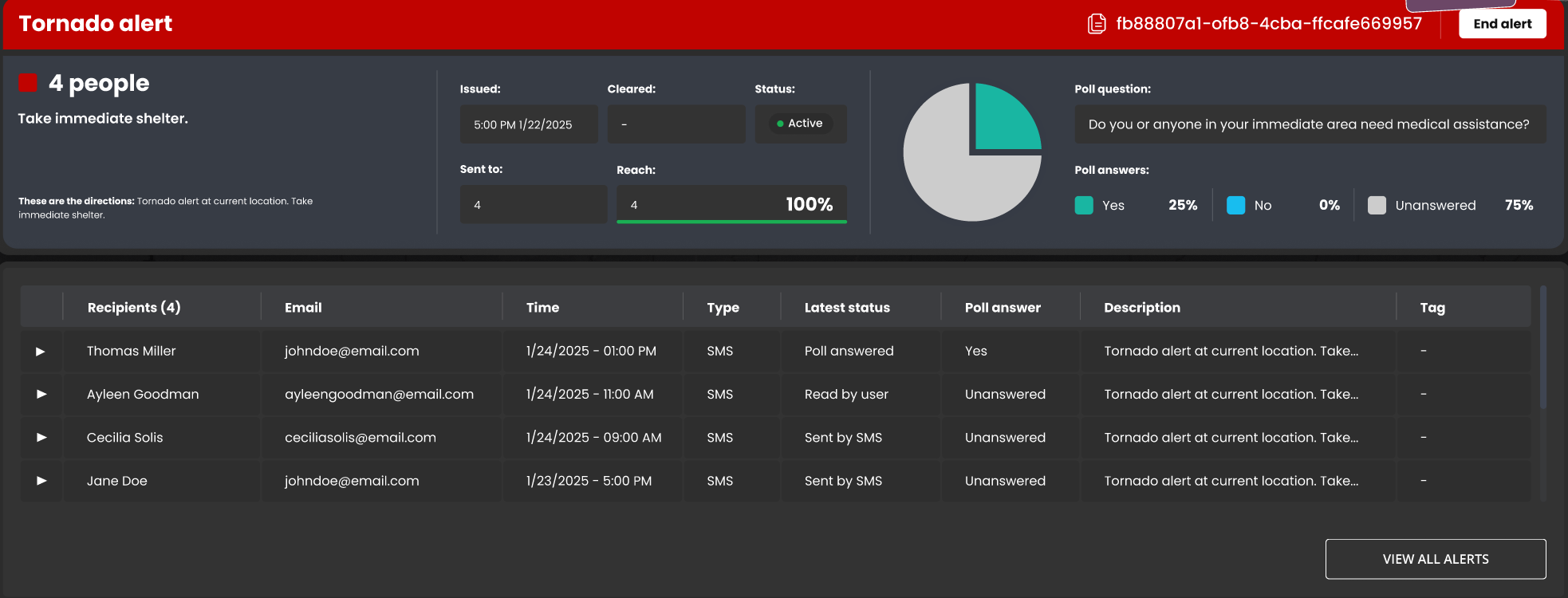
In addition, the response infrastructure needs to integrate with existing emergency protocols. When a fall is detected at a construction site, the system can automatically initiate the site's emergency response plan, notify the designated first aid provider, alert the nearest hospital, and begin documenting the incident for OSHA reporting. This integration ensures that technology enhances rather than complicates existing safety procedures.
Closing the response time gap saves lives, but it also changes the calculus of risk management. The question in incident review shifts from "Why didn't anyone know this was happening?" to "The system detected and responded immediately—what can we learn to prevent this in the future?"
Building the business case: What safety directors meed to know
Implementing a modern lone worker safety framework requires more than identifying the right technology. Safety directors need to build compelling business cases, navigate implementation across diverse operations, and demonstrate measurable value to stakeholders who may not fully appreciate the limitations of traditional approaches.
Implementation across industries
Safety directors should look for platforms that can be configured to address industry-specific risks rather than one-size-fits-all solutions.
The framework outlined above applies across sectors, but implementation details vary significantly by industry. In construction, the focus is often on fall detection, vehicle safety, and heat stress management across distributed job sites. Utility companies prioritize worker location tracking, confined space monitoring, and rapid response in remote areas. Agricultural operations need heat stress prediction and monitoring for large crews working in extreme conditions. Warehousing and logistics require solutions for overnight shifts, vehicle operation safety, and medical emergency detection in large facilities. Food production facilities need systems that work in cold storage environments and can handle the unique hazards of processing equipment.
The common thread is that each industry needs all three pillars — prevention, detection, and response — but the specific risks being prevented, the incidents being detected, and the response protocols being automated differ significantly.
Integration with existing safety programs
Modern lone worker technology should enhance, not replace, existing safety protocols. The most successful implementations integrate predictive intelligence into scheduling and work planning processes, incorporate biometric monitoring into existing hazard assessments and job safety analyses, and connect automated alerts to established emergency response procedures.
This integration approach serves multiple purposes. It reduces change management resistance by positioning new technology as an enhancement to familiar processes. It ensures that incident data flows into existing safety management systems for comprehensive tracking and analysis. And it allows organizations to maintain compliance with industry-specific safety standards while adding layers of protection that go beyond minimum requirements.
Measuring success and demonstrating ROI
Safety program ROI traditionally focuses on lagging indicators: reduced incident rates, lower workers' compensation costs, decreased OSHA citations. Modern systems enable a more comprehensive value measurement that includes both leading and lagging indicators.
Leading indicators include the number of high-risk situations predicted and prevented, instances where early detection enabled intervention before incidents escalated, and improvements in emergency response times. These metrics demonstrate proactive value even when incident rates are already low, which is often the case for organizations with strong safety cultures considering enhanced technology.
Lagging indicators include the traditional metrics but with more granular analysis. When incidents do occur, modern systems provide detailed data about conditions leading up to the event, exact response timelines, and factors that contributed to outcomes. This supports more effective incident investigation and prevention strategies.
The financial case typically focuses on several key areas: reduction in workers' compensation claims and insurance premiums, decreased costs associated with incident investigation and regulatory reporting, mitigation of litigation risk and potential damages, and improved operational efficiency when workers and managers have confidence in safety systems.
Getting buy-In from operations and workers
Technology implementation fails when it's imposed from safety departments without operational buy-in. Operations leaders need to understand that modern lone worker safety systems actually reduce operational friction and cost rather than adding it.
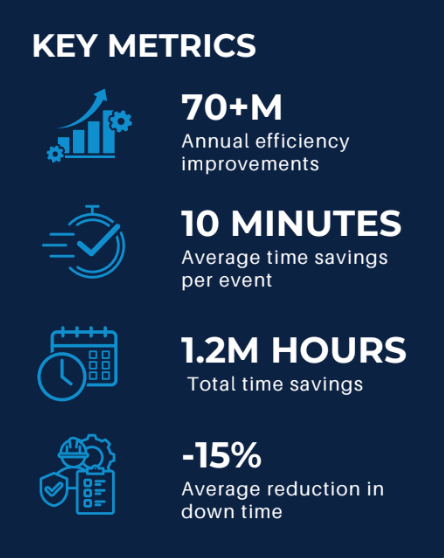
Below are statistics from a case study on lightning prevention with one of the world’s largest retailers.
Predictive intelligence helps optimize scheduling and resource deployment. Automated monitoring eliminates the time supervisors spend on manual check-in protocols. Two-way communication improves coordination beyond just safety applications.
Worker buy-in is equally critical and often more challenging. Workers may be skeptical of biometric monitoring, concerned about privacy, or resistant to wearing additional devices. Successful implementation requires transparency about what's being monitored and why, clear policies about how data will and won't be used, involvement of workers in pilot programs and feedback loops, and emphasis on how the technology protects them rather than surveilling them.
The privacy question deserves particular attention. Modern systems can anonymize individual biometric data while still providing program-level insights and maintaining emergency detection capabilities. Workers need to understand that the system is designed to save their lives during emergencies, not to discipline them for physiological responses to heat or stress. Organizations that get this wrong face not just implementation resistance but potential erosion of trust that undermines the entire safety culture.
From reactive to predictive
The lone worker safety landscape is undergoing a fundamental transformation. The manual system era, characterized by periodic check-ins, reactive response, and hope that workers can call for help during emergencies, is giving way to systems built on predictive intelligence, continuous monitoring, and automated intervention.
This shift reflects broader changes in workplace safety philosophy. We're moving from compliance-focused programs that meet minimum regulatory requirements to protection-focused systems that leverage technology to prevent harm. We're transitioning from safety as a set of rules and protocols to safety as an integrated system that actively works to keep people out of danger and intervenes immediately when danger occurs.
For Directors of Safety and EHS professionals, this transformation creates both opportunity and obligation. The opportunity is to implement systems that genuinely protect lone workers in ways that weren't possible even five years ago. The obligation is to recognize that these capabilities now exist, and that continuing to rely on approaches with known, critical limitations becomes increasingly difficult to defend when incidents occur.